
Published · Updated
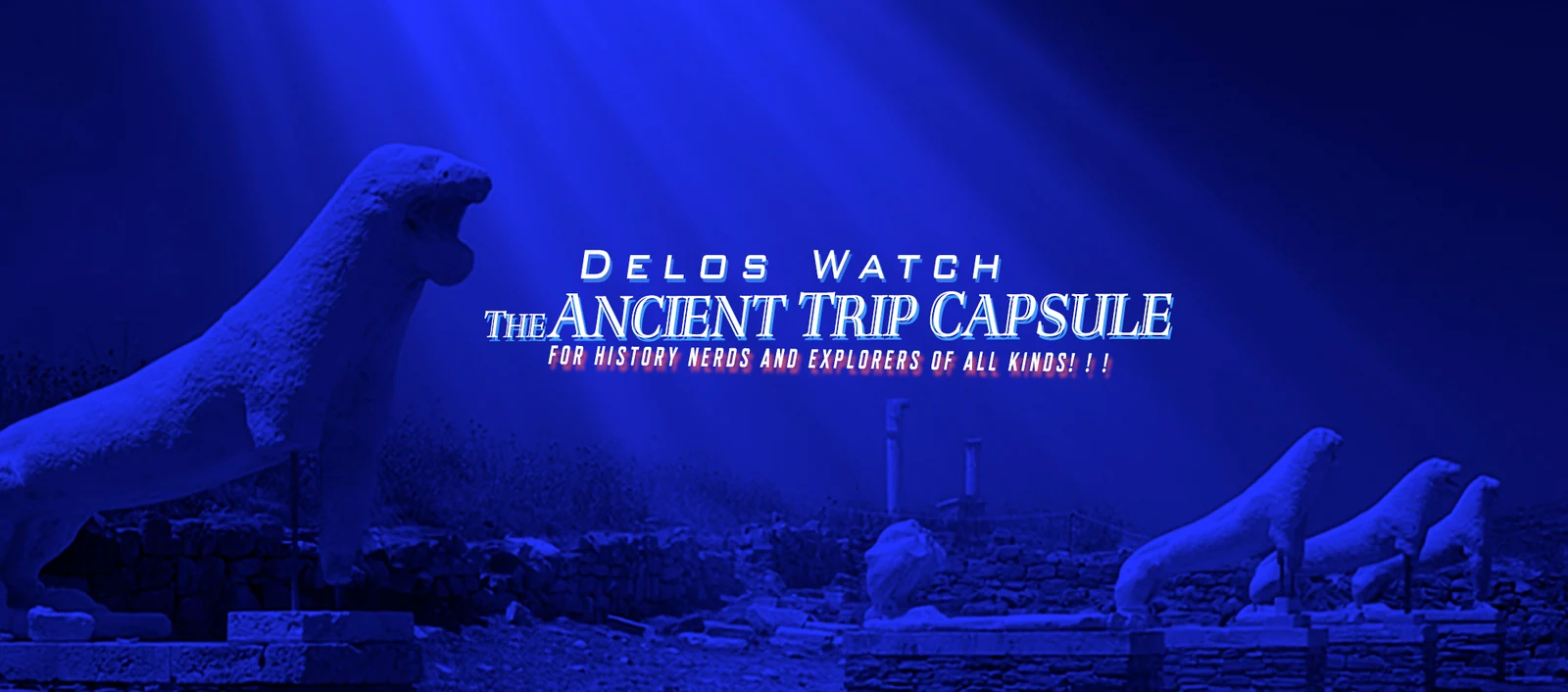
Delos Watch
Delos from Mykonos
The ancient Trip Capsule
For history nerds and explorers of all kinds!!!
Ancient tradition associated the island's name with the adjective dēlos, "visible, manifest". In the Hymn to Delos, Callimachus recounts the transition from the wandering Asteria to the anchored Delos, occasioned by the birth of Apollo and Artemis. This is a folk etymology rather than a linguistically attested derivation. As a cultural narrative, however, it inscribes into the identity of the place the relationship between concealment and appearance.
Sanctity and the institutional exclusion of life. The sanctity of Delos was imposed through successive purifications. The first took place under Peisistratus in the sixth century BC and was confined to the graves visible from the sanctuary. The second, decreed by the Athenians in 426/5 BC, was still more radical. According to Thucydides (3.104), all graves were removed to Rheneia, and from then on both childbirth and death were prohibited on the island. The island's present status as a protected archaeological site is, of course, not a continuation of that regulation. The site has been systematically excavated by the French School at Athens since 1873 and inscribed on the UNESCO World Heritage List since 1990. The coincidence nonetheless invites an interpretive reading: Delos remains a place from which everyday life is institutionally excluded, in immediate proximity to one of the most intensively touristified societies in the Mediterranean.
From sanctuary to commerce. From 478/7 BC the island housed the treasury of the Delian League, which was transferred to Athens in 454/3 BC. The decisive change came in 166 BC, when Rome handed Delos over to Athens and declared it a free port. A period of intense commercial prosperity followed. The island drew Italian negotiatores, Phoenicians, Egyptians and Syrians, together with their respective cults and associations. One building has been identified, with some reservation in the scholarship, as a synagogue. Strabo (14.5.2) reports that the slave market of Delos could handle tens of thousands of slaves in a single day, a figure that is most likely rhetorical exaggeration. This prosperity was cut short by the sack of 88 BC under Menophanes, a general of Mithridates VI, and by the pirate raid of Athenodorus in 69 BC. This historical cycle, from sanctity to commercialisation and from there to collapse, offers an analytical framework for the contemporary economy of the Aegean without recourse to anachronistic analogies.
The enduring interest in Delos can be attributed to two interrelated factors. The first is the completeness of its historical cycle, which allows the relationship between the sacred, the economy and political power to be studied within a confined space. The second is its counterpoint to Mykonos: set against it, Delos constitutes a rare institutionally protected space, outside the production of experience for the market.