
Updated
Analysis
NAMMOS Mykonos: How a Psarou restaurant became a beach brand
From a seaside restaurant founded in 2003 to an international hospitality name, NAMMOS reflects the transformation of Mykonos into a global luxury destination. But behind the champagne, fashion and beachside spectacle lies a more complex story of place, business and identity.
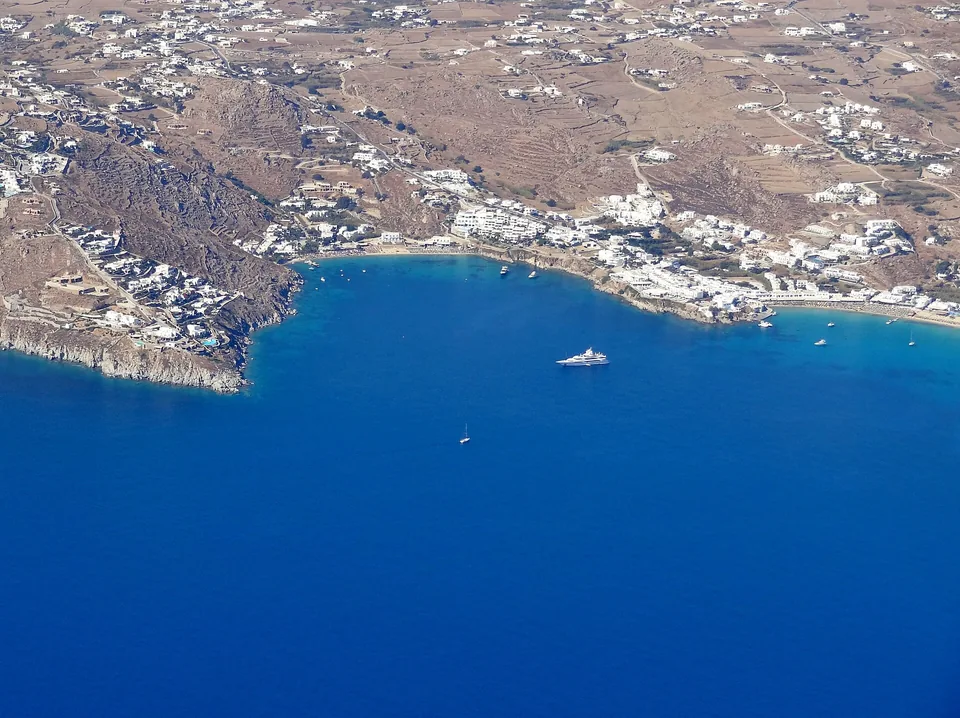
MYKONOS, GREECE
On the southern coast of Mykonos, Psarou Beach occupies a remarkable position in the island's international reputation. Its sheltered bay, clear Aegean waters and concentration of luxury hospitality have made it one of the most recognisable addresses in the Mediterranean.
At the centre of that reputation stands NAMMOS. What began in 2003 as a seaside restaurant has developed into a hospitality and lifestyle brand associated with fine dining, luxury retail, beach experiences and destinations far beyond Greece.
The story of NAMMOS is also the story of how Mykonos evolved from a celebrated Cycladic holiday island into a global reference point for luxury tourism. Yet understanding NAMMOS requires looking beyond its carefully constructed image. Its development connects gastronomy, fashion, international expansion and the growing pressures placed on some of the island's most valuable coastal spaces.
According to the company's official history, NAMMOS began in 2003 as a restaurant on Psarou Beach. The concept brought Mediterranean dining into direct contact with the beach, combining food, service and the atmosphere of one of Mykonos's best-known bays. That relationship between location and hospitality became central to the brand. Rather than treating a restaurant meal as a separate activity from a day at the beach, NAMMOS developed a destination where dining, relaxation and entertainment could form parts of a wider experience.
Over time, the name came to represent more than its original restaurant. The operator's own descriptions now distinguish between restaurant dining, beach services, private cabanas, events and other hospitality experiences. Those distinctions matter to visitors. A restaurant reservation, beach arrangement and event booking may involve different conditions, availability and charges. The name may be shared, but the services are not necessarily interchangeable.
To understand NAMMOS, it helps to understand Psarou itself. Mykonos has beaches associated with different types of experience, from quieter stretches of coastline to established centres of music and nightlife. Psarou developed a particular identity around high-end hospitality and its sheltered coastal setting.
For NAMMOS, the location became an essential part of the proposition. The restaurant did not simply operate on an attractive beach. Its commercial identity became closely associated with that specific place, to the point where Psarou and NAMMOS are frequently mentioned together in international travel coverage.
But the distinction between them remains important. Psarou is a public geographical location. NAMMOS is a commercial hospitality operation situated there. Other businesses, visitors and activities form part of the wider beach environment. Understanding that difference is especially important when considering the continuing development of luxury tourism along the island's coastline.
Dining remains fundamental to the NAMMOS identity. The company's restaurant describes a Mediterranean-focused menu featuring seafood, fish, sushi and selected meat dishes. It is an approach that reflects two overlapping aspects of contemporary Mykonos hospitality: regional Mediterranean influences and the expectations of an international luxury clientele. The restaurant's published concept emphasises presentation, premium ingredients and service within a seaside environment. Those are the operator's stated positioning and menu characteristics, rather than the conclusions of an independent restaurant review.
The business model is nevertheless significant. At NAMMOS, food is part of a broader destination experience. A meal may sit alongside a day at the beach, a fashion-shopping visit or an announced music event. The result is a hospitality format built around the time a visitor spends in one location rather than around a single transaction.
One of the most important developments in the brand's evolution was the introduction of NAMMOS Village in 2017. The luxury retail destination extended the concept beyond beach hospitality and dining. Fashion, jewellery, art and architectural design became part of the wider visitor experience associated with Psarou.
According to NAMMOS Village's official presentation, the destination was designed around a luxury-shopping environment informed by the architectural character of Mykonos. Its development marked a significant shift in the commercial identity of the area. Visitors were no longer being invited solely to eat or spend time by the sea. They could also enter a setting organised around international fashion and luxury retail.
The significance extends beyond the individual boutiques. NAMMOS Village illustrates how a successful hospitality address can develop into a broader commercial destination, connecting experiences that traditional tourism businesses often provide separately. It also reflects the increasing importance of branded environments in luxury travel, where dining, shopping, leisure and atmosphere are presented as interconnected parts of a visit.
Perhaps the clearest demonstration of NAMMOS's transformation is the extension of its name beyond Greece. The group's published history identifies international hospitality destinations associated with Dubai, Limassol and Cannes, as well as plans for other markets. NAMMOS Hotels & Resorts also describes the launch of its first Mykonos hotel in 2024 and further international hospitality ambitions.
This expansion represents an important reversal of the traditional relationship between a holiday destination and a hospitality brand. Originally, NAMMOS benefited from the established appeal of Mykonos and Psarou. As its identity expanded, the association with Mykonos became part of what the brand could offer in other destinations. In commercial terms, the island's atmosphere, hospitality culture and reputation became elements of an internationally transferable concept.
That does not mean every NAMMOS venue operates in the same way, or that events and services announced in one destination apply elsewhere. NAMMOS Mykonos, NAMMOS Dubai and other locations must be understood as distinct physical destinations, even when they share a broader brand identity. For travellers, that distinction is practical. Opening dates, dining arrangements, event programmes and booking conditions must always be checked for the specific destination.
Music is another element of the NAMMOS Mykonos experience, though it is important to distinguish between the venue's general reputation and its documented programming. The official NAMMOS events website advertised a Made in Mykonos event featuring DJ Vassili Tsili Christos on July 25, 2026, with a scheduled start at 16:00. That announcement provides a concrete example of how music programming forms part of the venue's wider hospitality offer. It does not, by itself, independently establish that the performance took place. Nor does one event announcement establish a permanent DJ residency or a complete calendar for another season.
The distinction is particularly important for travellers looking ahead to 2027. Historical event listings can show how a venue has programmed its entertainment, but only new, dated announcements can confirm future appearances. For up-to-date events across the island, readers can consult the Mykonos Illustrated What's On calendar.
The development of high-profile beach destinations also raises questions about how coastal space is used and regulated. NAMMOS became part of that wider debate in 2023, when Greek authorities investigated unauthorised construction on Mykonos. In June 2023, Kathimerini reported that unauthorised structures associated with the NAMMOS complex at Psarou were being demolished following inspections.
On June 16, subsequent reporting stated that the Syros planning authority had certified compliance concerning the demolition requirements relevant to the previously sealed restaurant area, allowing progress towards reopening. The broader inspection process did not necessarily end with that development.
A later Kathimerini report, published in April 2024, described additional findings and compliance checks concerning properties associated with the operation. These reports concern specific historical planning and enforcement proceedings. They do not establish the current legal status of every facility at Psarou.
Their relevance is broader than one hospitality business. They reflect the tension between intensive tourism development, environmental protection, coastal access and regulatory oversight on an island where demand for premium locations is exceptionally high. An independent account of Mykonos's luxury transformation should include that dimension alongside its commercial successes.
For anyone considering a visit, the first decision is what kind of experience they are looking for. NAMMOS offers different services under a shared destination identity, and visitors should confirm the exact arrangements for each.
Restaurant dining: Check reservations, menu availability and the operating schedule directly with the restaurant.
Beach experiences: Confirm the availability and conditions of beach services or cabanas for the intended date.
Events and music: Use official dated announcements rather than older social-media posts or archived event listings.
Luxury shopping: Consult NAMMOS Village for the relevant boutiques and seasonal operation.
Location: NAMMOS Mykonos is situated at Psarou Beach. The beach itself and the commercial venue are different locations for planning purposes.
The seasonal nature of Mykonos tourism makes current verification especially important outside the peak summer months. A published programme or opening schedule from July or August should not be assumed to apply to an October visit or a future season.
The story of NAMMOS is not simply about an expensive restaurant on a famous beach. It illustrates a larger commercial transformation. A specific coastal location became the setting for a recognisable hospitality experience. That experience expanded into fashion, entertainment and hotel development. Eventually, the name itself became an international brand with a strong association to Mykonos.
In that sense, NAMMOS demonstrates how the identity of a destination can become part of a business's international value. But the development also raises questions about how luxury tourism reshapes the places from which it draws its appeal.
Psarou remains a geographical place, not merely a brand address. Its character is shaped by the coastline, the businesses operating there, the people who visit and the rules governing development. That is why the NAMMOS story is worth examining beyond its commercial mythology.
It brings together two sides of contemporary Mykonos: the extraordinary international reach of its hospitality industry and the continuing responsibility to preserve the island that makes that industry possible. The restaurant began at Psarou in 2003. More than two decades later, the most interesting question is no longer simply what NAMMOS offers visitors. It is how much of modern Mykonos can be understood through the evolution of one beachside address.
- NAMMOS Mykonos — Official Restaurant
- NAMMOS Village — Official History
- NAMMOS Hotels & Resorts — About
- NAMMOS — Made in Mykonos, July 25, 2026
- Kathimerini — Demolitions at Mykonos beach businesses, June 2, 2023
- Kathimerini / KNEWS — Compliance development, June 16, 2023
- Kathimerini — Planning inspections and findings, April 21, 2024
Editorial research reviewed October 23, 2026. Historical announcements and reporting are distinguished from currently verified operational information.